

The Role of Technology in Promoting Vaccination and Combating Vaccine Hesitancy
The global conversation around vaccines has once again returned to the headlines. In late August 2025, the U.S. Food and Drug Administration (FDA) announced a significant shift in its COVID-19 vaccination policy: access to the updated vaccines is now restricted to seniors over 65 and individuals with certain health conditions, while others must first obtain a physician’s recommendation (NPR). At the same time, the Centers for Disease Control and Prevention (CDC) is facing internal upheaval, with leadership changes and senior scientists resigning amid growing debates over public trust in vaccines. These developments have not only reignited political controversy but also deepened concerns about how shifting guidelines affect public perception and vaccine confidence.
Against this backdrop, the role of technology in supporting vaccination campaigns has never been more critical. Vaccine hesitancy, driven by misinformation, distrust in institutions, and logistical barriers, remains a pressing global challenge. Yet, technology offers powerful tools to counter these forces: from data-driven outreach that reminds people when and where to get vaccinated, to AI-powered communication strategies that address concerns in clear and empathetic language, to blockchain systems that ensure transparency and trust in vaccine records.
By looking at how digital platforms, artificial intelligence, and decentralized technologies are being applied, we can see that technology is not only about convenience; it is a frontline defense in preserving confidence, ensuring access, and strengthening public health resilience in uncertain times.
Data-Driven Outreach and Personalized Reminders
One of the strongest ways technology has advanced vaccination campaigns is through targeted, data-driven outreach. Rather than relying on broad, one-size-fits-all messaging, health systems and pharmacies are now tailoring communication strategies based on local epidemiology and individual health data.
A telling case comes from Walgreens, which has pioneered the use of real-time analytics to improve vaccine uptake. Its “Flu Index” not only tracks the spread of respiratory viruses by ZIP code but also uses this information to nudge communities toward vaccination when risk is highest. For example, during the 2022–2023 flu season, Walgreens partnered with local health departments to identify under-vaccinated areas and launched geo-targeted text campaigns. The result was a measurable increase in flu shot appointments in counties that historically had lower coverage.
Another example is New York City’s Department of Health, which, during the COVID-19 rollout, developed a digital alert system connected to electronic health records. Patients received personalized text messages when they became eligible for vaccines, along with direct scheduling links. Studies published afterward showed that such personalized reminders increased vaccination rates among underserved groups, particularly in communities where mistrust of government messaging was high.
On a global level, India offers a compelling case with its CoWIN digital platform, launched during the pandemic to manage registrations, track distribution, and send SMS confirmations for vaccination appointments. By centralizing logistics and communication, CoWIN not only reduced fraud and duplication but also ensured that millions of people in rural areas received timely reminders via their mobile phones - a crucial step in a country where smartphone penetration is uneven but basic mobile connectivity is widespread.
AI-Powered Messaging to Build Confidence
If data-driven reminders help bring people to vaccination sites, the way information is communicated often determines whether they show up at all. This is where artificial intelligence has started to play a critical role, especially in addressing vaccine hesitancy.
In recent years, the role of artificial intelligence in public health communication has gained tangible support through empirical research. One notable study examined the persuasiveness of ChatGPT-4-generated vaccine messages compared to those written by humans. The findings were striking: messages crafted by GPT‑4 were perceived as more persuasive on several key factors, including addressing side effects and stigma, though human-written messages performed better when emphasizing the convenience of vaccination.
Another pivotal investigation explored how ChatGPT-augmented messages fared against original content in messaging campaigns. Participants compared pairs of messages, one augmented by ChatGPT and one not, and overall, the AI-enhanced versions were rated slightly higher, especially when they were longer. Notably, readers' perceptions of persuasiveness were not adversely affected by learning that the messages were AI-assisted personally, but AI systems, trained on medical guidelines and optimized for tone, can simulate human-like reassurance at scale. This helps bridge the gap between cold institutional messaging and the personalized guidance people seek when making health decisions.
Yet even the most empathetic and well-crafted messages cannot fully resolve the crisis of trust that underlies vaccine hesitancy. People not only want to feel heard, but they also want assurance that the systems managing their health data and vaccination records are reliable, secure, and transparent. This is where other technological solutions, such as blockchain-based systems for vaccine verification, have been proposed as tools to reinforce institutional credibility and counter misinformation.
Blockchain for Transparency and Trust
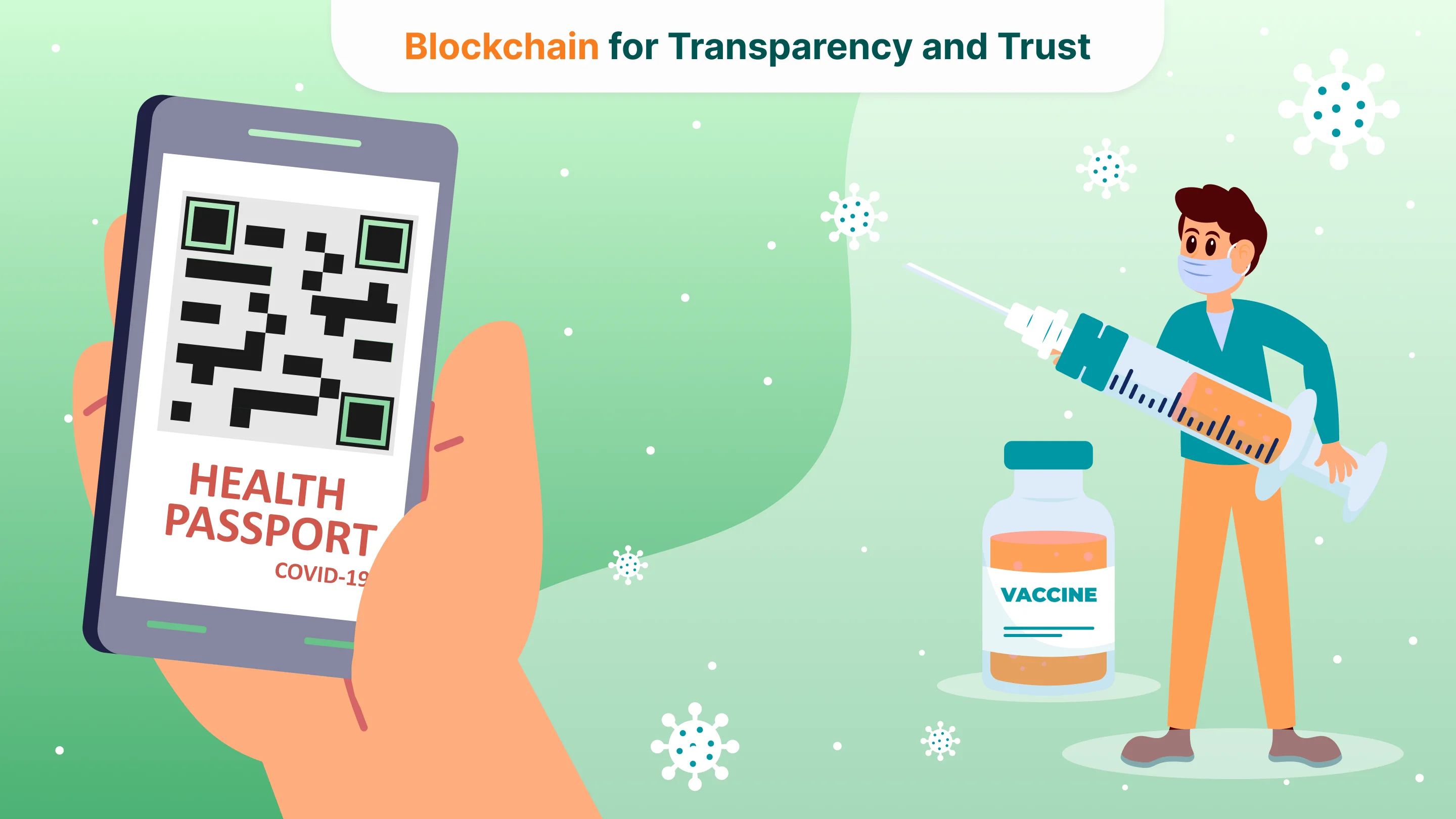
The idea of using blockchain technology in vaccination campaigns gained momentum during the COVID-19 pandemic, when digital vaccination certificates and “immunity passports” became part of the global conversation. Proponents argued that decentralized, tamper-proof records could solve two persistent challenges: verifying vaccination status and ensuring transparency in vaccine distribution. Indeed, pilot projects in the European Union’s Digital COVID Certificate (EUDCC) and India’s CoWIN platform demonstrated how digital systems could streamline verification, reduce fraud, and speed up cross-border travel.
Yet, the promise of blockchain has been met with significant practical and ethical challenges. Critics point out that while blockchain secures records against manipulation, it does little to address the root causes of vaccine hesitancy, such as mistrust in institutions, cultural resistance, or misinformation. In fact, over-emphasizing digital certificates during COVID-19 sometimes backfired, reinforcing suspicions that vaccination was less about health and more about control. In France and Italy, for example, protests against “health passes” highlighted how technological enforcement can polarize rather than unite.
This experience raises a deeper governance dilemma: who should oversee blockchain-based health systems, and how can they guarantee neutrality in polarized political environments? The technology itself may be tamper-proof, but the institutions deploying it are not. Without clear oversight, independent auditing, and public accountability, blockchain risks being seen as just another layer of bureaucracy rather than a trust-building tool.
In short, blockchain can be a valuable supporting tool for record-keeping and logistics, but it is not a silver bullet. Without careful integration into broader public health strategies that emphasize transparency, community engagement, and equity, its role risks being overstated. Instead of framing blockchain as the solution to vaccine hesitancy, it may be more accurate to view it as a piece of infrastructure that supports - but cannot replace - the human dimensions of trust and persuasion in vaccination campaigns.
The Future of Vaccination Lies in Both Code and Conversation
Technology has undeniably transformed the way vaccination campaigns are designed, delivered, and perceived. From AI-augmented messaging that speaks with empathy at scale, to blockchain frameworks promising transparency, to data-driven outreach that reaches people at the right moment - these tools represent a new frontier in public health. They allow us to move faster, communicate smarter, and anticipate barriers before they harden into resistance.
Yet the paradox is clear: while technology can amplify trust, it cannot manufacture it. An algorithm may persuade someone to book an appointment, and a digital record may verify their status, but neither can replace the deeper social contract between institutions and citizens. In an age where information spreads instantly but credibility is fragile, the “human side” of vaccination - the doctor who listens, the community leader who reassures, the policymaker who acts transparently - remains the anchor that gives these technologies legitimacy.
The true potential of AI and digital systems, then, is not to substitute human trust, but to scale it without diluting it. If deployed wisely, they can extend the reach of compassion, clarity, and credibility into places where human capacity alone would fall short. But if deployed carelessly, they risk becoming the very symbols of distance and control that fuel hesitancy.
The challenge before us is to ensure that technology in vaccination is not just a tool of efficiency, but a medium of trust. If we succeed, we may discover that the most profound role of AI in public health is not its intelligence, but its ability to make the human voice travel farther than it ever could on its own.

Tell us about your project
Fill out the form or contact us

Tell us about your project
Thank you
Your submission is received and we will contact you soon
Follow us