
Using Technology to Address Social Determinants of Health
When people think about health, they often imagine doctors, hospitals, and medications. Yet decades of research show that these clinical factors account for only a fraction of what truly determines whether someone thrives or struggles with illness. The rest lies in what public health experts call the social determinants of health (SDOH) - the conditions in which people are born, grow, live, work, and age. Income, housing stability, education, food security, safe neighborhoods, and access to transportation all shape life expectancy as powerfully as medical treatments.
In the digital era, a new dimension has entered the picture. Technology is no longer a luxury or a side feature of health systems; it is itself becoming a determinant of health. Access to the internet, ownership of a smartphone, and the ability to navigate online tools increasingly define who gets timely care, who manages chronic conditions effectively, and who falls behind. The challenge now is not whether technology matters, but how it can be mobilized to close, rather than widen, existing health gaps.
From Access to Agency: How Technology Changes the Role of Patients
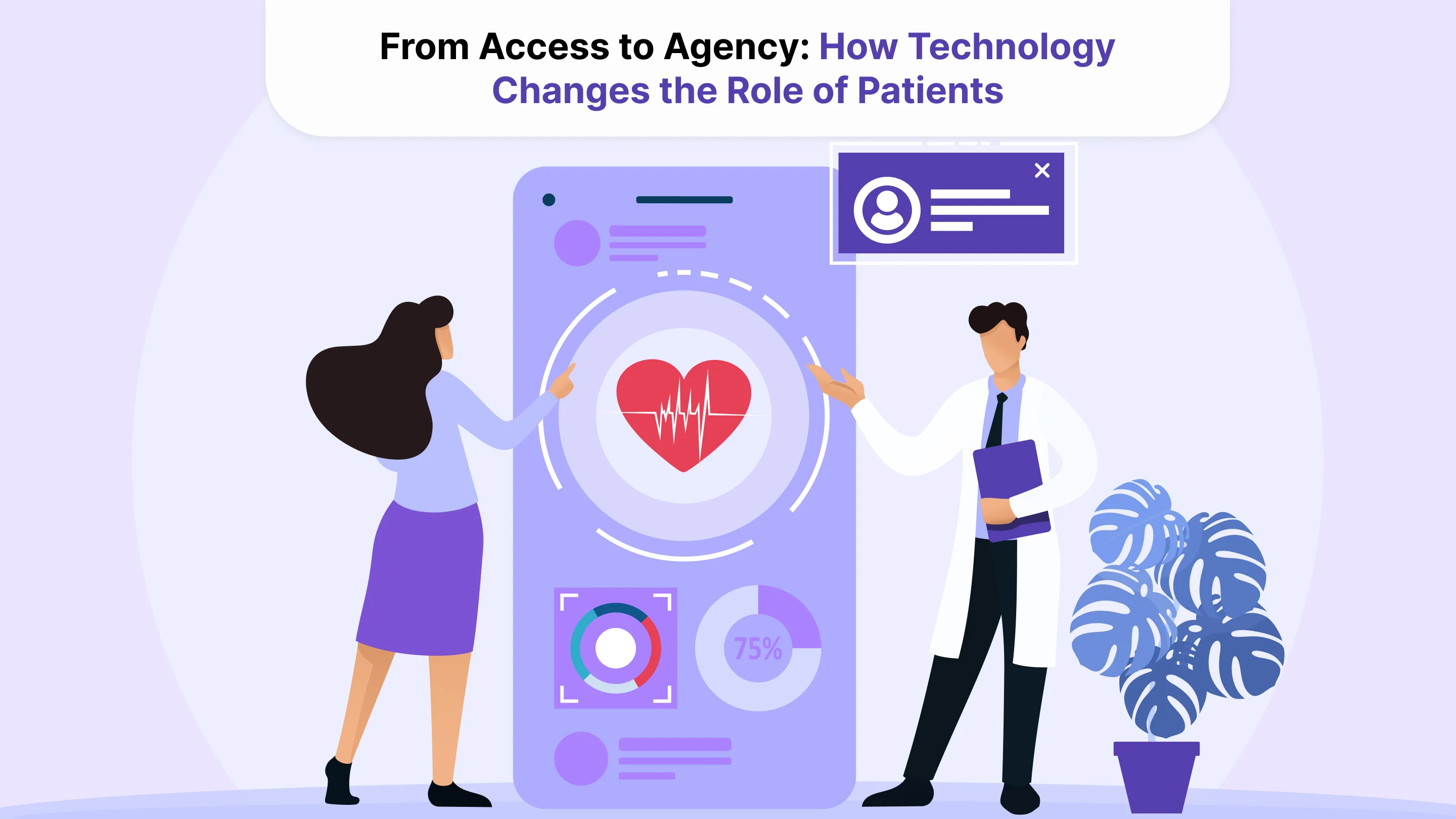
One of the most significant shifts brought by technology is not just access to information but a transformation in agency. Health systems have traditionally been structured around information asymmetry: doctors held the knowledge, while patients relied on them to interpret symptoms and recommend treatment. Digital technologies erode this imbalance.
For instance, patients with chronic conditions now track blood pressure, glucose levels, or symptoms in real time using personal devices. When they arrive at a clinic, they no longer present vague recollections but data, often weeks or months of detailed records. This fundamentally changes the consultation. Physicians are no longer the sole interpreters of illness; patients arrive as informed participants.
Studies of diabetes management apps, for example, have shown that patients who track daily patterns are more engaged in care decisions and more likely to adhere to treatment regimens. The shift here is from passive recipient to active manager of health. Agency, not just access, is the deeper mechanism by which technology influences outcomes.
Yet agency also depends on literacy. Without the ability to interpret charts, logs, or health alerts, data becomes noise rather than empowerment. That is why digital health literacy programs are increasingly viewed as critical complements to technological access.
Datafication of the Social Context
Technology not only empowers patients; it also datafies their environment. Health systems are beginning to recognize that clinical records without social context are incomplete. A patient treated repeatedly for asthma may live in substandard housing with mold exposure. A mother struggling to manage hypertension may simultaneously face food insecurity.
Capturing these determinants systematically is a challenge. Traditional health records rarely include information about housing, employment, or family stress. This is where digital technology, especially natural language processing (NLP), has shown potential. Lybarger and colleagues (2022) demonstrated that unstructured clinical notes often contain hints of social risk - mentions of homelessness, job loss, or domestic instability - that never make it into structured fields. NLP can surface these signals, making them visible for care teams.
But datafication has a double edge. While it enables targeted support, it also risks oversimplification. Social determinants are dynamic and multidimensional. Encoding them into checkboxes or algorithmic categories can flatten complexity. A note that “patient recently lost job” may capture economic strain, but it cannot fully describe the psychological toll, the family dynamics, or the cascading risks that follow.
This tension between the need for measurable data and the risk of reductive coding is at the heart of the challenge. Technology brings visibility, but it must avoid treating human lives as mere data points.
Technology as Infrastructure vs. Technology as Intervention
A common trap in digital health policy is to confuse intervention with infrastructure. Pilot programs abound: new apps for maternal health, telemedicine platforms for rural clinics, AI-driven tools for risk prediction. These interventions can be innovative, but they often falter when the infrastructure to support them is absent.
Infrastructure means broadband connectivity, affordable devices, interoperable standards, and long-term technical support. Without these, interventions collapse as soon as pilot funding ends. The COVID-19 pandemic provided a vivid example. Telehealth expanded rapidly under temporary policy changes and subsidies. But when funding dried up or regulations shifted back, many patients, particularly in rural areas without stable internet, lost access again.
This imbalance between flashy interventions and neglected infrastructure reflects a political reality: interventions are visible and easy to showcase, while infrastructure is slow, costly, and less glamorous. Yet without infrastructure, interventions remain fragile.
Comparative studies underscore this point. In countries that invested in universal broadband as part of a national strategy, such as South Korea, digital health initiatives are more sustainable. In contrast, in parts of the United States where broadband remains patchy, telehealth cannot fulfill its promise despite millions of dollars invested in applications and platforms.
The lesson is clear: sustainable impact on SDOH requires seeing technology as infrastructure first, intervention second.
The Equity Paradox of Innovation
Every technological advance carries an equity paradox. New tools almost always benefit those who already have resources - higher education, disposable income, urban residency - before they reach those most in need.
Consider mobile health apps. Surveys show that they are disproportionately used by younger, urban, and more educated populations. For older adults, rural communities, or those with limited literacy, uptake is far lower. The result is that innovation can initially widen disparities. This is not unique to health: economists have long documented how early access to innovation follows socioeconomic gradients.
The paradox raises a policy question: should technology be designed for universal use from the outset (the universal design approach) or tailored specifically for vulnerable groups (the targeted design approach)? Universal design can promote broad uptake but may miss the nuanced needs of disadvantaged populations. Targeted design can address equity gaps but risks stigmatizing users or failing to scale.
Some hybrid models are emerging. For instance, programs in Canada that provide free mobile data and devices to low-income patients with chronic disease combine infrastructure support with app-based monitoring. The design is both targeted (supporting those at greatest risk) and universal in functionality (apps usable by anyone). Such models offer a way forward, but they demand political will and financial investment.
Beyond Health: Technology Across Domains
One of the most underexplored aspects of technology and SDOH is that many impactful solutions lie outside the formal health sector. Health is interwoven with housing, education, transport, and economic security.
Digital technologies in these areas can indirectly but powerfully shape health. In Malawi, mobile money platforms have been used to provide conditional cash transfers to families for food and schooling. These transfers improved child nutrition and reduced household stress, both strong determinants of health. In the United States, ride-sharing partnerships with Medicaid programs have addressed transport barriers, ensuring patients reach appointments and avoid costly emergency visits.
Education technologies also matter. Remote learning platforms during the pandemic showed how educational access influences health trajectories: children disconnected from online schooling faced not only academic setbacks but also mental health risks and reduced access to school-based meals.
These examples highlight a crucial point: technology for SDOH cannot be siloed within health ministries or hospitals. The most effective interventions often occur in cross-sector collaborations between health providers, education systems, transport authorities, and fintech innovators. Health outcomes then emerge as by-products of broader social resilience.
Measuring Impact in Complex Systems
A persistent challenge is how to measure the true impact of technology on SDOH. It is easy to track downloads, log-ins, or telehealth appointment numbers. But these are process metrics, not outcome metrics. What matters is whether technology reduces inequities, lowers emergency room visits, improves adherence, or enhances quality of life.
The difficulty lies in the complexity of causality. If a patient avoids hospitalization after using a digital nutrition app, was the app responsible? Or was it a change in income, family support, or local food availability? Disentangling these factors requires sophisticated study designs and long-term follow-up.
Recent research has begun to explore the biological pathways of social determinants. Cui and colleagues (2025) in npj Digital Medicine showed that social conditions such as chronic stress leave measurable biological signatures, altering inflammation, immune function, and even gene expression. This opens a new horizon: digital interventions that address SDOH may ultimately shift biological outcomes, not just social ones. But proving this requires integrating social, clinical, and biological data in ways that most health systems are not yet equipped to manage.
Conclusion
Technology will not remain static. The next phase of digital health lies in dynamic, anticipatory systems that go beyond access and inclusion. Real-time data integration, predictive models that account for social context, and intelligent platforms that automatically connect people with resources can transform how societies manage determinants of health.
Future innovation should aim at proactivity rather than reaction: preventing crises before they occur, linking individuals seamlessly to community services, and embedding health into the everyday technologies people already use. As wearables evolve into social health monitors, as AI becomes capable of detecting risks in advance, and as interoperability bridges the gap between health and social systems, technology will move from being a supportive layer to becoming an active driver of healthier lives.
In this sense, the future is not about whether technology can help address social determinants of healthб it is about designing it to do so by default.

Tell us about your project
Fill out the form or contact us

Tell us about your project
Thank you
Your submission is received and we will contact you soon
Follow us